
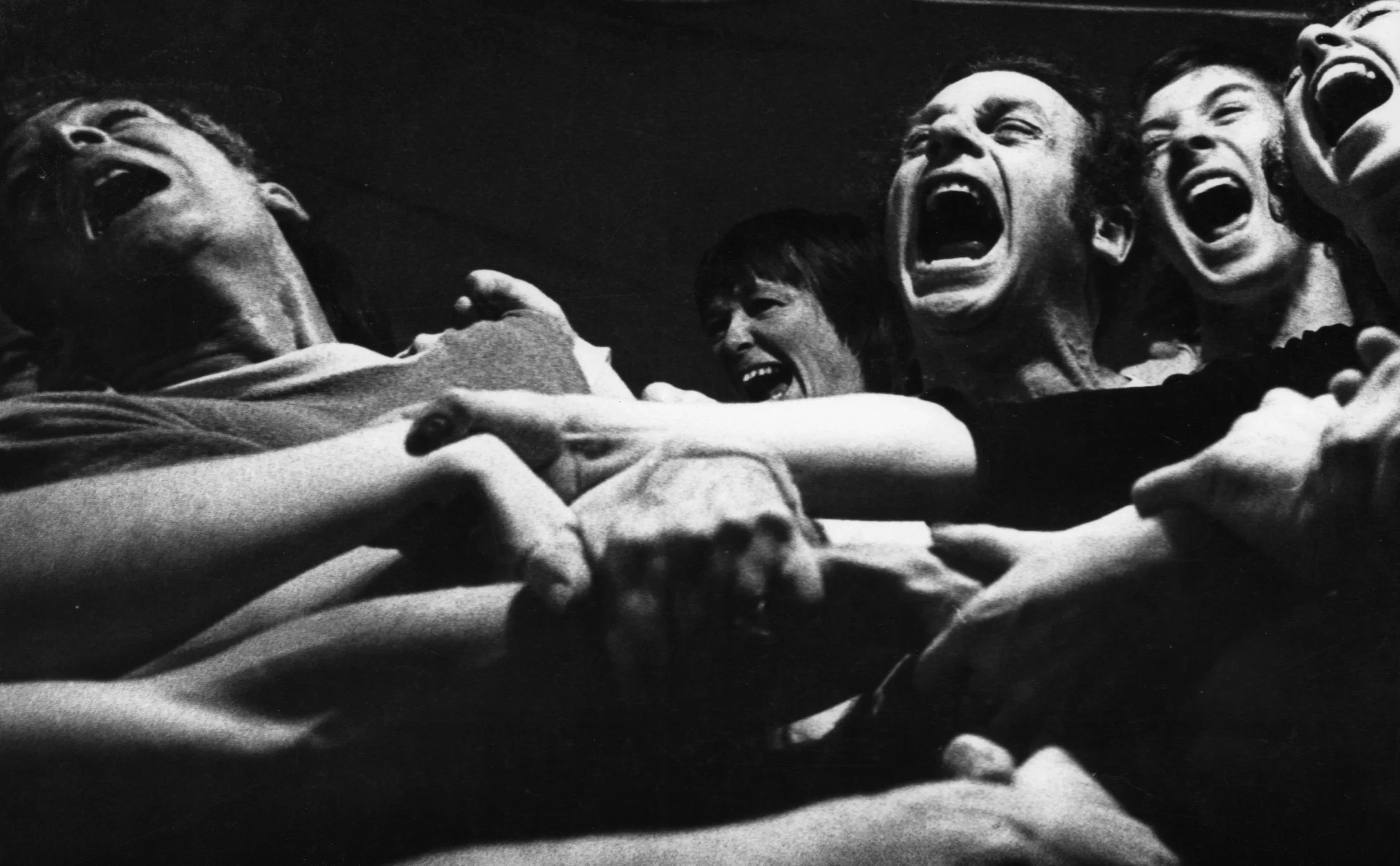
“I live by breathing in and breathing out. I sing by transforming this breath into sound, the sound which in turn forms the material for contents of the soul. Our life stretches from morning until evening, from dusk to dawn embracing the night. ... In these elements the soul rises and falls in equal measure between above and below, between light and dark. The human voice is based on the same elements. ... Learning how to sing is learning how to love. ... To love means to touch in all ways. ”
THE HUMAN VOICE
WITHOUT BOUNDARIES
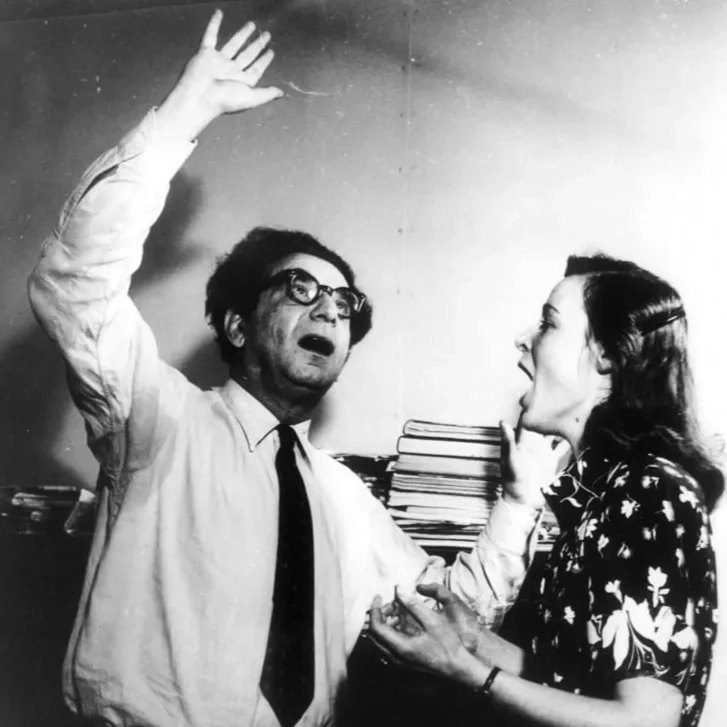
Alfred Wolfsohn was a master teacher, for whom singing was a vehicle for probing the psyche, integrating the personality and broadening consciousness. Wolfsohn’s approach was inclusive; he did not work with virtuoso performers alone, and believed that everyone had an innate connection to song and musicality. He was also very aware of the deeply embodied effort required to unleash the full range of the human voice. His primary interest was in helping his students to explore and develop a much wider range when using their voices to sing or to speak. Instead of a range of two to three octaves, he believed that it was possible for both men and women to sound out vocally down to very deep and up to extremely high pitches, calling this the eight-octave voice. He worked carefully using a piano as a point of reference and was very aware of the deeply embodied effort required to unleash the full range of the voice.
For Wolfsohn, connecting to the self through an exploration of this expanded vocal range was a healing process for the person sounding. The voice teacher had an equally great responsibility towards his or her pupil; the voice work was a vocation, and the voice teacher was considered the guardian and representative of creative life.
After Wolfsohn’s death in 1962, his pupil, Roy Hart, took the helm of the teaching practice Wolfsohn had developed. By this point, Hart was a master vocal practitioner himself, having fully developed his own unchained voice with all its expressive potential. He thus embodied Wolfsohn’s ideal, and importantly took the voice work in an important new direction, through his passion for theatre.
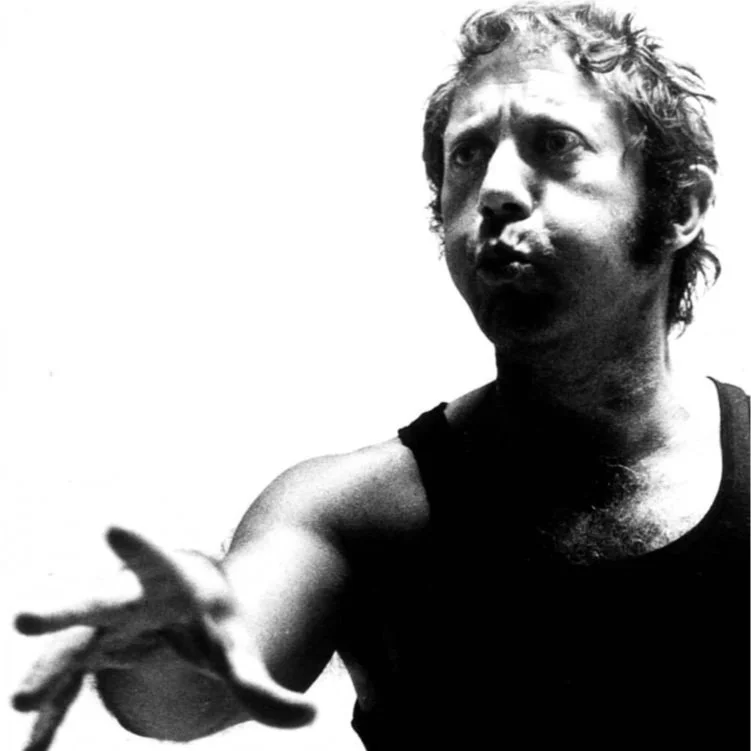

Roy Hart was Wolfsohn's natural successor — having immersed himself deeply in the work, learning not only how to embody it, but also its transmission to others — and having already formed close relationships with many of Wolfsohn’s other students. He assumed responsibility for the singing lessons and he amalgamated the German master teacher’s pupils into a coherent organisation based in North London — the Roy Hart Speakers/Singers — which would become known as the Roy Hart Theatre from 1969 onwards. Under Hart’s guidance, there was a shift in emphasis in the work from cathartic release to theatrical performance. He brought expanded physical training to the work: several members of the company were dance practitioners, and movement sessions became a central aspect of the practice. He also succeeded in generating a true communitarian identity amongst group members.
The Roy Hart Theatre received far greater recognition in mainland Europe for its productions and performances, than in London. Thus, in the spring of 1973, it was decided that Roy Hart and those that chose to join him would depart London permanently for the south of France. Those who decided to leave sold all of their belongings, pooled their resources and collectively bought a large abandoned property in the Cévennes hills, about fifty miles north-west of Avignon. Between 1974 and 1975, forty nine members of the Roy Hart Theatre settled in Malérargues, where some still live, perform and teach today.
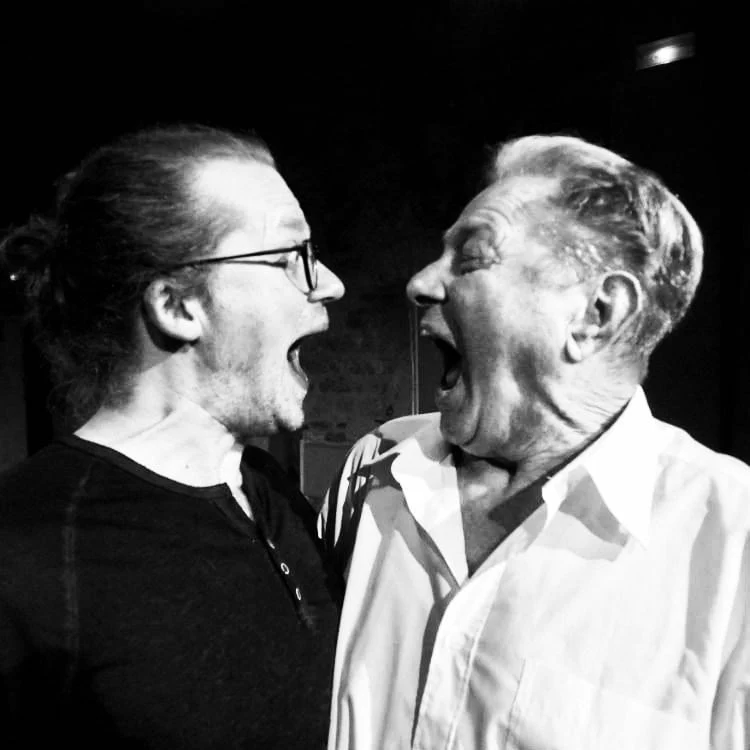
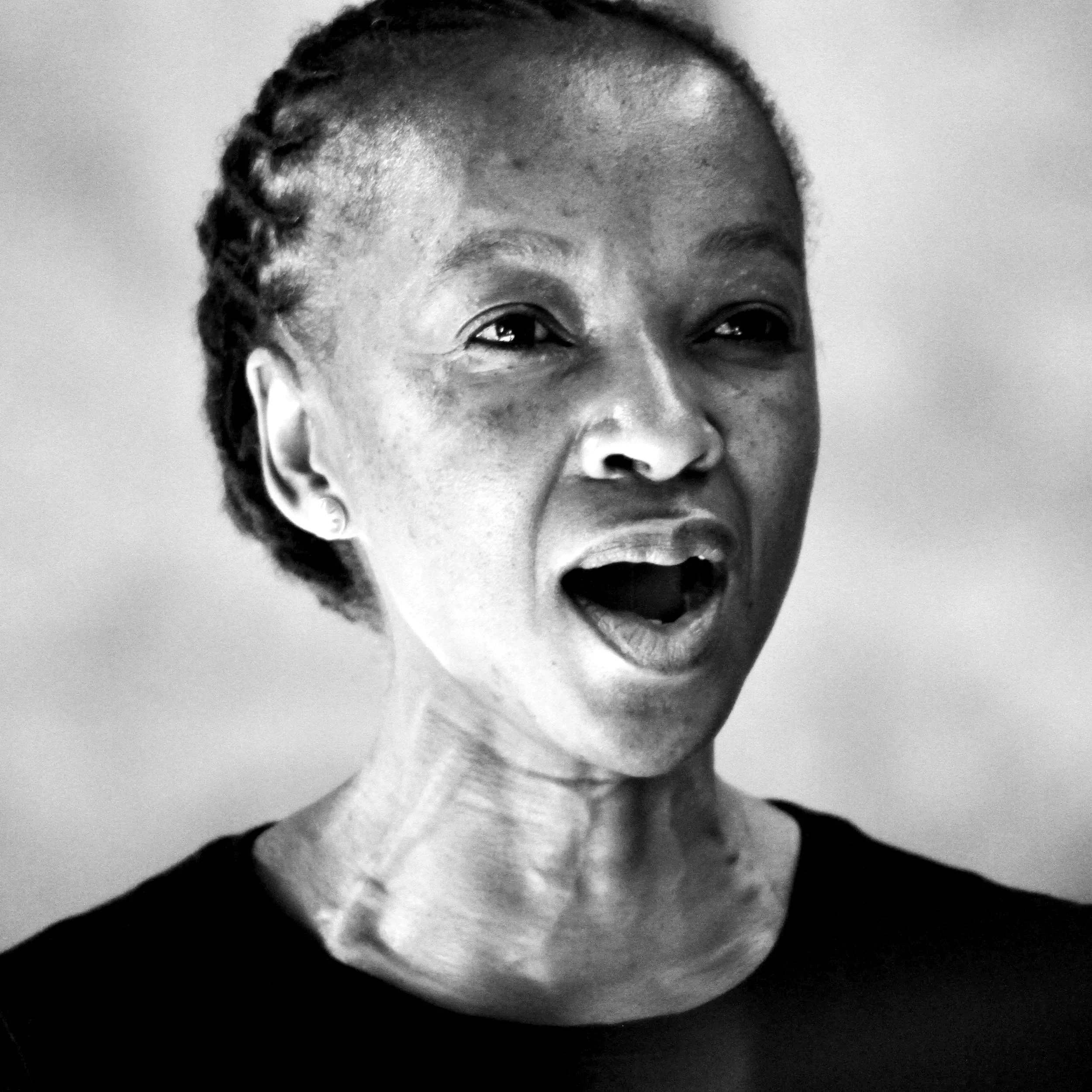
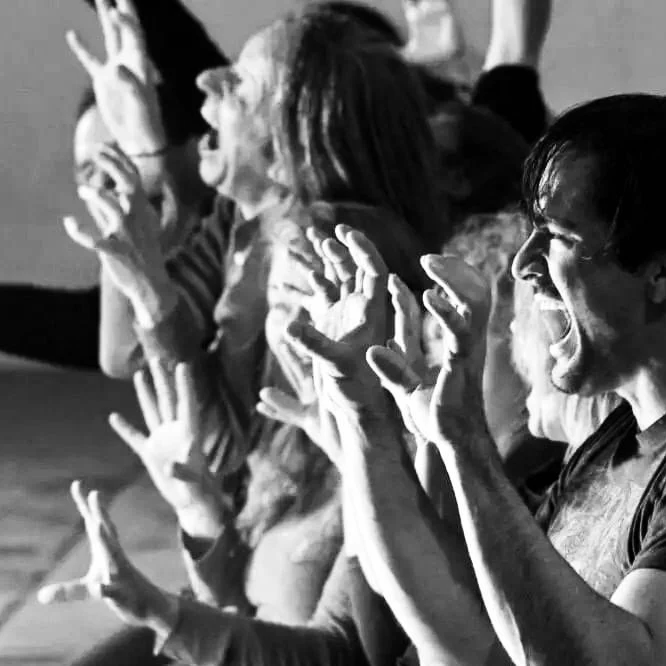
Encountering immeasurably deep personal tragedy with the deaths in 1975 of Roy Hart, Dorothy Hart and Vivienne Young in a car accident, over the following fifty years the founding members of the Roy Hart Theatre evolved an approach to artistic creation and transmission of the work on the expanded human voice, developing theatrical productions and workshops, and training successive generations of teachers that now number close to a hundred worldwide.
Today, voice lessons in Malérargues take place in studio spaces. Students are invited to explore different forms of vocal and physical expression, with equal emphasis on listening — to their inner worlds, to the space around them and to others in the room. Seasoned teachers guide solo, dyad and group work through structured exercises designed to help students connect vocal expression to their physical reality, their emotional landscapes and their psyche. Students are encouraged beyond perceived limits of depth, dimensionality and commonly accepted gender and aesthetic norms, to discover the full expansiveness and expressiveness of their vocal range and colour. Evoking imagination and aliveness awakens creativity. It is a process of unmasking and becoming.
The work on the human voice without boundaries is taught not only as an artistic practice but as a way to live fully, consciously and expansively: to encounter and embody the most intimate aspects of self and to express these in all their multiplicity.
Read what participants say about their experience at Malérargues here.
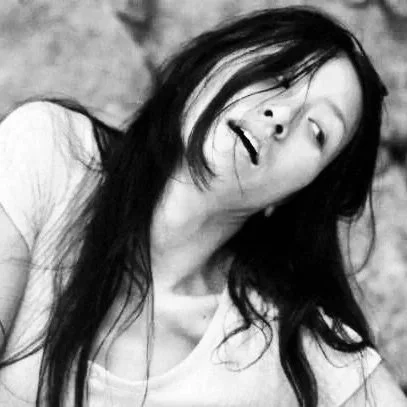
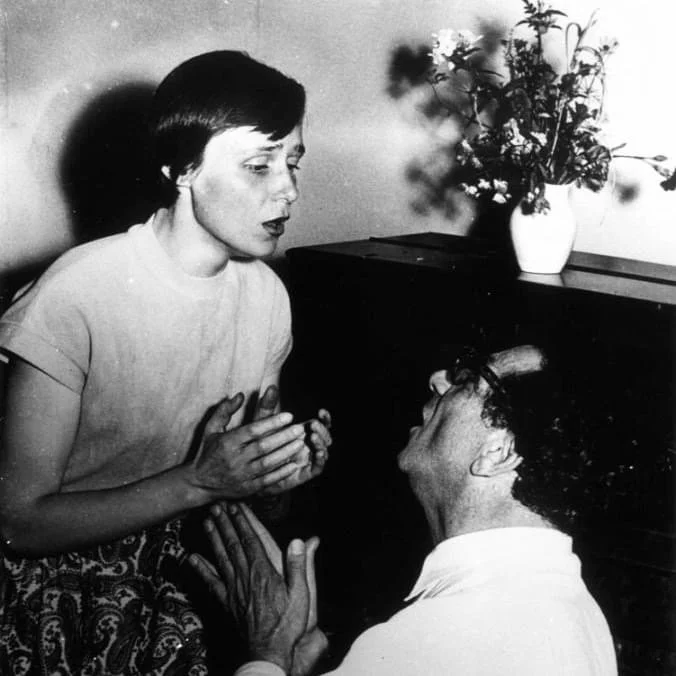
“Your belief, treasured for so long, must be true: namely, that singing is not something separate from life or juxtaposed to it, but that singing is the expression of life itself. ‘Learn to sing oh soul!’ exclaimed Nietzsche, and so now I have sung out all that which I have profoundly sensed and felt; it was music, it was my voice which poured out of me, not through willpower but coming from my deepest self.”